Your Bag is Empty
Book an Appointment
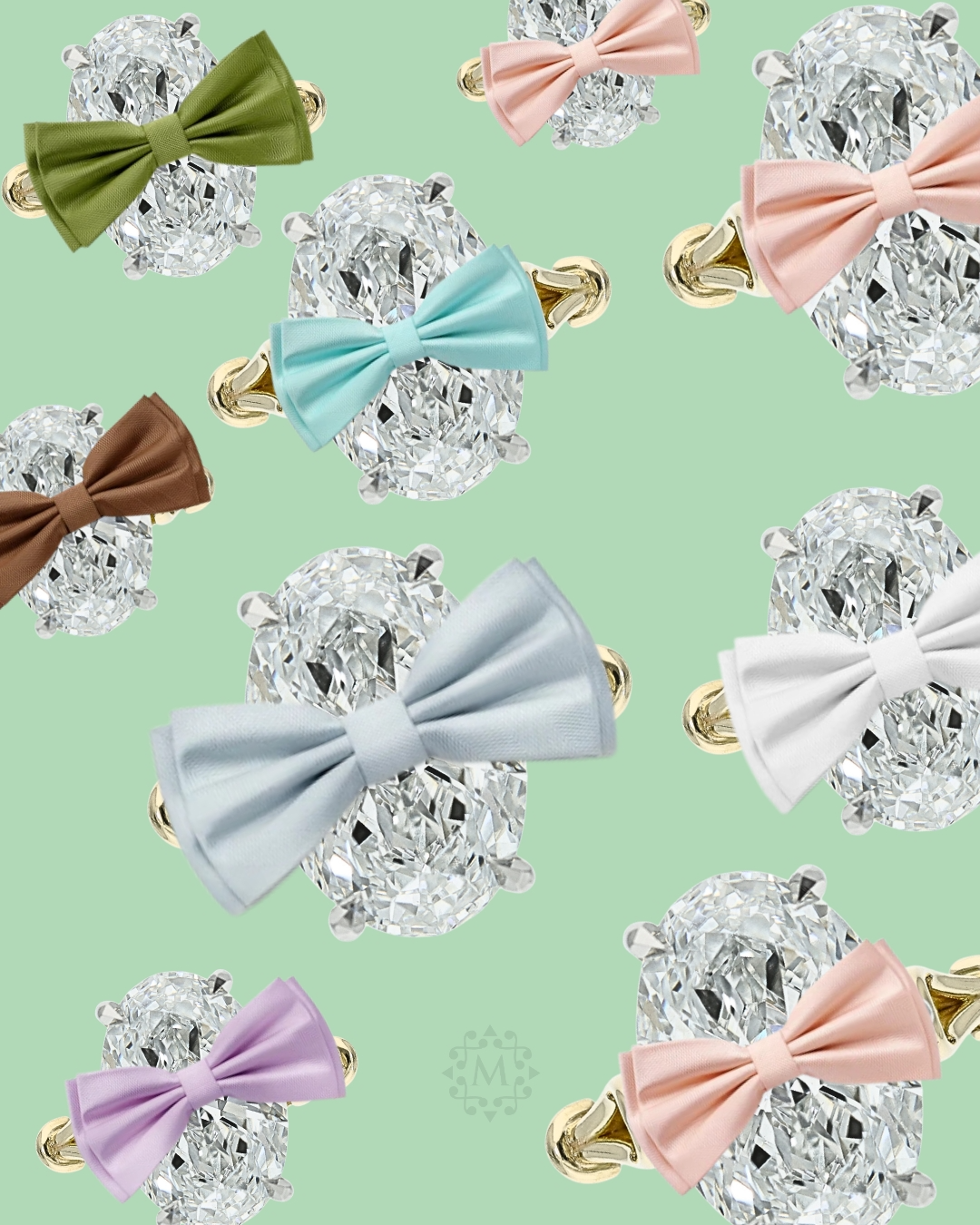
If you have spent any time researching oval diamonds online, you have probably come across warnings about something called the bow tie effect. It tends to hit buyers at about two in the morning, somewhere between their fourteenth YouTube video and their third Reddit thread. Suddenly every oval diamond they look at has a dark shadow across the middle, and what started as excitement turns into anxiety.
I understand why it happens. But after twenty-five years of working with diamonds, I think the internet has made this a much bigger problem in people's heads than it ever is in real life.
So let me tell you what I actually tell clients when they ask me about it.
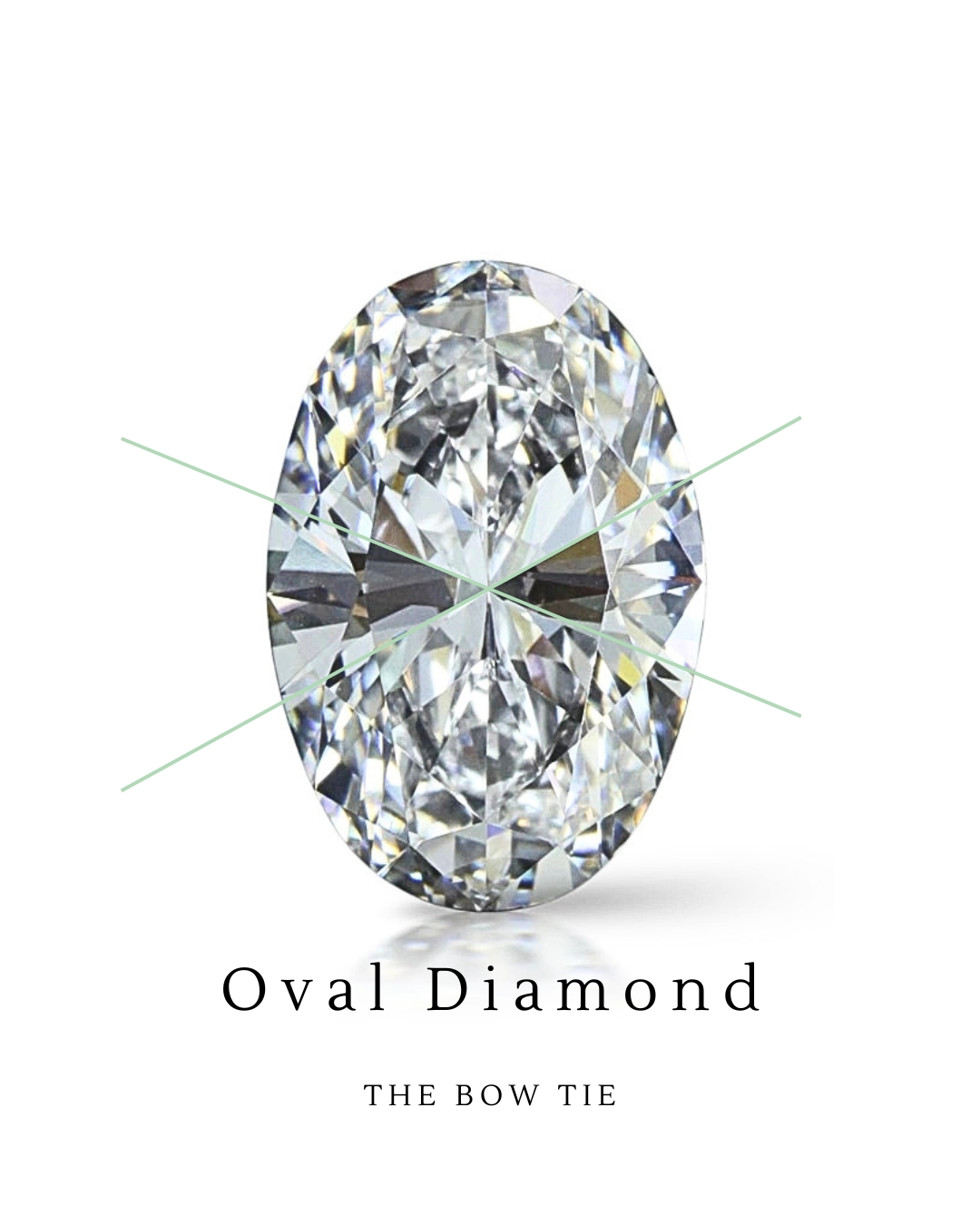
This is the part most articles either skip or bury at the bottom: all oval diamonds have a bow tie to some degree. Every single one. It is not a defect. It is not a sign of a bad diamond. It is simply a consequence of the elongated shape.
When light enters a round brilliant diamond, it bounces evenly off symmetrical facets in every direction. When light enters an oval, the longer, narrower proportions mean that some facets in the centre of the stone cannot reflect light back to your eye as efficiently. That creates a darker area across the middle — the bow tie.
The question is never "does this oval have a bow tie?" It always has one. The question is whether it is balanced, subtle, and part of the overall character of the stone — or whether it dominates and distracts.
Here is something that rarely gets mentioned online: most clients who come to me worried about bow ties cannot actually see one when I put the diamond in front of them.
They have spent hours staring at magnified photographs and close-up videos taken under clinical lighting conditions — conditions designed to reveal every possible detail of a stone. In that context, a bow tie looks dramatic. In real life, on a hand, in natural light, a well-cut oval diamond simply sparkles. The bow tie is there if you go looking for it, but it is not what your eye is drawn to.
Not long ago, a client called Jack came down from Dublin visibly stressed. His fiancée had told him that whatever oval diamond he picked, he had to be absolutely sure it had no bow tie. According to her, it was the most important thing. She had done her research and this was the brief he had been sent in with. I sat him down and explained what I have just explained to you — that every oval has a bow tie, that a slight one is completely normal, and that what actually matters is cut quality and overall balance. By the end of the conversation he was in a completely different place. The stress was gone. He picked a beautiful stone and knew exactly why he was choosing it. That is what happens when good information replaces the noise.
This is where it gets practical. When I assess an oval diamond, I am not looking for the absence of a bow tie — because that does not exist. I am looking at the whole stone.
There are a few things that matter far more than most buyers realise.
Cut quality is everything, but you will not find it on the certificate. This is one of the most important things I can tell you: the GIA does not grade cut on oval diamonds. They grade cut on round brilliants, but for fancy shapes — ovals, pears, marquise — there is no cut grade on the report. That means you cannot rely on a piece of paper to tell you whether an oval is well cut. You need to see it, or you need to trust the jeweller assessing it for you.
Depth and table proportions matter. For ovals, I look for a depth percentage between roughly 58 and 62 percent and a table percentage between 53 and 63 percent. Outside those ranges, you start to see stones that are either too shallow — where light leaks out the bottom — or too deep, where the bow tie becomes heavier and the stone looks smaller than its carat weight suggests.
The facet pattern underneath the stone makes a real difference. Oval diamonds can be cut with different pavilion facet arrangements — four-main, six-main, or eight-main patterns. More facets in the centre of the stone generally means more light reflected back, which reduces the visual impact of the bow tie. This is the kind of thing you will never see discussed in a standard product listing, but it is one of the first things I check.
The length-to-width ratio affects it too. Ovals between 1.3 and 1.5 tend to show the least problematic bow ties. Go longer and narrower — above 1.5 — and the bow tie often becomes more pronounced. That does not mean longer ovals are bad, but they need to be cut exceptionally well to keep everything in balance.
I reject oval diamonds when the bow tie stops being part of the stone's character and starts being the first thing you see. When it sits as a heavy dark band across the middle that does not break up as you move the stone in your hand. When it makes an otherwise beautiful diamond look like it has a shadow permanently sitting on it.
It does not happen as often as the internet would have you believe. But it does happen, and it is exactly why I assess every stone personally rather than buying blind from a screen.
A subtle bow tie can actually add depth and contrast to an oval diamond. It gives the stone visual interest — areas of light and dark that play off each other as the diamond moves. A completely flat, even distribution of light can actually make a diamond look lifeless. Some contrast is a good thing.
The best oval diamonds I have worked with over the years have all had a slight bow tie. It is part of what makes them ovals rather than rounds. The shape, the elegance, the way they elongate the finger — all of that comes from the same proportions that create the bow tie in the first place.
You cannot have one without the other.
Stop trying to find a perfect oval diamond in a photograph. It does not work. Photographs lie — lighting conditions, camera angles, and magnification all distort what you would actually see in person.
Instead, focus on finding a well-cut oval with good proportions, strong symmetry, and a bow tie that blends naturally into the overall appearance of the stone. If you can do that, you will have a diamond that looks beautiful in every light — not just under a studio lamp.
And if you are unsure, come in. I will put three or four ovals in front of you side by side, and within five minutes you will understand the difference between a bow tie that matters and one that does not. It is one of those things that is almost impossible to learn from a screen and immediately obvious in person.
Eric McGuire is the founder of McGuire Diamonds in Gorey, Co. Wexford. He has been designing and handcrafting engagement rings since 2000.